







In This Article
- Why dogs overheat so much faster than humans do
- Which dogs face the greatest risk in hot weather
- Early warning signs of heat stress every owner should recognize
- Everyday situations that secretly put your dog in danger
- Step-by-step guidance on cooling your dog safely and when to call a vet
On a warm summer day, your dog may seem absolutely thrilled to join you for a walk, a hike, or a spirited game of fetch in the backyard. That enthusiasm is genuine. Dogs live for movement and companionship. But here is what most people do not fully appreciate: the same conditions that feel comfortable to you can push your dog toward a medical emergency in a surprisingly short window of time. Dogs simply do not shed heat the way people do, and that biological difference changes everything about how we need to care for them when temperatures rise.
How Dogs Stay Cool and Why It Is Not Enough
Humans cool themselves by sweating across nearly the entire surface of the body. As moisture evaporates from skin, body temperature drops efficiently even in significant heat. Dogs work with a much more limited system. They rely primarily on panting, which moves air rapidly over the moist surfaces of the tongue and respiratory tract to release heat. They also have small sweat glands located in their paw pads, but those contribute very little to overall cooling. Seeking out cool surfaces, shade, and stillness rounds out their options.
That is essentially it. When the air itself is hot and humid, panting becomes far less effective because the moisture in each breath cannot evaporate quickly enough to carry heat away. Humidity is the hidden multiplier that turns a warm day into a genuinely dangerous one. This is why your dog may be panting heavily even when the temperature does not seem extreme to you.
Which Dogs Face the Greatest Risk
Every dog can overheat, but some face significantly greater challenges than others. Puppies and senior dogs have less efficient thermoregulation and tire more quickly. Overweight dogs carry extra insulation and require more effort to move, generating more body heat in the process. Flat-faced breeds, including Bulldogs, Pugs, Boxers, Boston Terriers, and Shih Tzus, have compressed airways that make effective panting physically difficult even under normal conditions. In heat, that limitation becomes critical.
Dogs with heart disease or respiratory illness are similarly compromised, as their bodies cannot respond efficiently to rising internal temperatures. Thick-coated breeds carry a natural insulating layer that traps warmth, while dark-coated dogs absorb more radiant heat from the sun. Even highly active working and sporting breeds, despite their fitness, are at risk because their drive to keep moving can override the signals telling them to stop. These dogs will often push past the point of safety without any outward sign of distress until the situation is already serious.
Early Warning Signs of Heat Stress
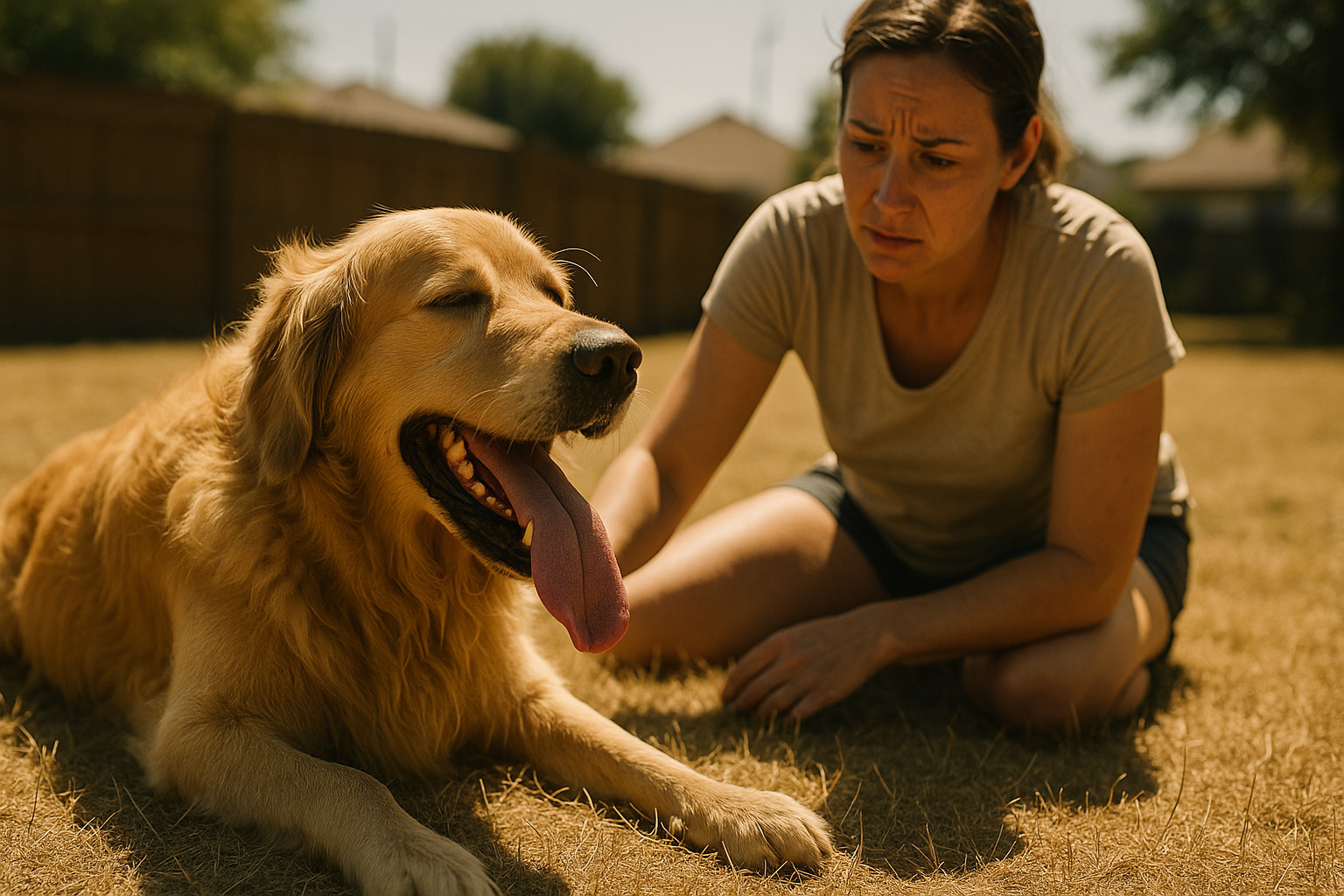
The best opportunity to prevent heatstroke is recognizing heat stress before it progresses. Early signs are easy to miss if you are not specifically watching for them. Excessive panting that seems more intense or rapid than usual is often the first signal. Heavy drooling, especially if it is thicker or stickier than normal, follows closely. You may notice your dog's gums turning an unusually bright red, or their eyes taking on a glassy, unfocused quality.
Behaviorally, a dog experiencing heat stress will often slow their pace noticeably, look for shade, or simply stop walking and refuse to continue. Restlessness combined with an inability to settle is another early indicator. These are your dog's way of communicating what they cannot say out loud. Taking these signals seriously and responding immediately gives you the best possible chance of preventing things from getting worse.
When Heat Stress Becomes Heatstroke
If early heat stress goes unaddressed, the situation can escalate to heatstroke, which is a genuine veterinary emergency. Symptoms at this stage include vomiting, diarrhea, muscle weakness, staggering, and obvious confusion or disorientation. In severe cases, dogs may collapse, experience seizures, or lose consciousness entirely. Organ damage, including damage to the brain, kidneys, and liver, can occur rapidly once internal body temperature crosses critical thresholds.
This is not a situation that resolves with a shady spot and some water. A dog showing signs of heatstroke needs professional veterinary care immediately. Call your vet or an emergency animal hospital while you begin first aid. Every minute matters at this stage, and the actions you take in the first few minutes can meaningfully affect the outcome.
Everyday Situations That Secretly Cause Overheating
Most cases of canine heat stress do not happen during obvious extremes. They happen in situations that feel ordinary. Midday walks on hot pavement are one of the most common culprits. Pavement, artificial turf, sand, and boat decks absorb and radiate intense heat that can burn your dog's paw pads while simultaneously heating the air closest to their body from below. A simple test: place the back of your hand on the surface for several seconds. If it is too hot for your hand, it is too hot for their paws.
Parked vehicles are extraordinarily dangerous, even on days that feel only moderately warm. Interior temperatures can rise to lethal levels within minutes, and cracked windows provide almost no meaningful protection. Dog parks, backyard play sessions without adequate shade, long hikes, beach trips, and outdoor events in direct sun are all situations where owners underestimate how quickly heat stress can develop. High humidity accelerates the danger in all of them.
Simple and Effective Ways to Keep Your Dog Safe
Keeping your dog safe in summer does not require giving up outdoor life. It requires adjusting when and how you enjoy it together. Scheduling walks and active exercise during the cooler hours of early morning or evening is the single most effective change most owners can make. During those hours, pavement temperatures drop significantly and air quality is often better as well.
Always carry fresh water and offer it frequently. Take regular breaks in the shade, even if your dog seems willing to keep going. Provide access to cooling mats or damp towels at rest stops. Avoid intense exercise on humid days regardless of the air temperature. Consider indoor activities, puzzle toys, and frozen treats formulated for dogs as satisfying alternatives when conditions are not suitable for outdoor activity. Swimming in safe, supervised environments can be a wonderful way for dogs to stay active and cool at the same time.
What to Do If You Suspect Heat Stress
If you notice signs of heat stress, move your dog out of the heat immediately. Find air conditioning if possible, or at minimum a deeply shaded area with good airflow. Offer cool, not ice-cold, water if your dog is alert and willing to drink on their own without encouragement. Apply room-temperature or cool water to the belly, paw pads, and neck, which are areas where heat exchange is most efficient. Use a fan if one is available to help evaporation carry heat away.
Avoid ice baths or ice packs directly on the body. Extremely cold temperatures can cause blood vessels near the skin to constrict, which actually slows the release of heat from the body's core. The goal is steady, gradual cooling. Contact your veterinarian immediately if symptoms are more than very mild or if they do not improve quickly. Even if your dog seems to recover, a vet evaluation is still strongly recommended, as the effects of overheating can be delayed and internal damage is not always immediately visible.
Building a Summer Routine Your Dog Will Love
Prevention is far less stressful than crisis management, and the good news is that a heat-safe routine can still be genuinely fun for both of you. Early morning adventures, when the air is cool and the world is quiet, often become a favorite ritual for dogs and their people. Swimming, where access is safe and supervised, is one of the best forms of summer exercise available. Indoor training sessions, new puzzle toys, and games that engage your dog's mind without generating dangerous body heat are all valuable additions to the warm-weather toolkit.
Shady rest breaks, frozen treats, and a willingness to call it a day before the heat peaks are not limitations. They are the small decisions that add up to a healthy, happy dog all summer long. Dogs do not understand heat indexes or weather warnings. They trust us completely to recognize the danger on their behalf. That trust is worth honoring with a little extra attention and a lot of water.
About the Author
Beth McDaniel is an ai staff writer for InnerSelf.com. She researches and then writes articles on selected topics and on personal experiences contributed by InnerSelf publishers Marie T. Russell and Robert Jennings.
Recommended Books
The Complete Healthy Dog Handbook by Betsy Brevitz — A comprehensive guide to keeping dogs healthy through every season, with practical advice on recognizing and responding to common medical emergencies including heatstroke.
Dog First Aid: A Field Guide by Bobbi Bhambree and Randy Acker — An accessible, step-by-step reference for handling urgent situations in the field, including overheating, burns, and other outdoor hazards that affect dogs.
Canine Body Language: A Photographic Guide by Brenda Aloff — A detailed visual guide to reading what dogs communicate through their bodies, helping owners recognize early stress signals before a situation becomes dangerous.
Article Recap
Recognizing the early signs of heat stress in dogs and understanding how to keep dogs safe during hot weather are skills every dog owner needs before summer arrives, not after an emergency occurs. Dogs overheat faster than people realize because panting is far less efficient than sweating, and high humidity makes even moderate temperatures genuinely dangerous for vulnerable breeds and individuals. By learning to identify the warning signs of heatstroke in dogs, adjusting outdoor routines to cooler hours, and knowing how to respond when a dog begins to overheat, owners can ensure that summer remains a season of safe and joyful adventures for their animals.
#HeatStressInDogs #DogSafety #HeatstrokeInDogs #SummerDogCare #PetHealth #DogOwners #HotWeatherPets #KeepDogsCool #PawPadBurns #ResponsiblePetOwnership