
Music Videos
Thread By Thread – Gloria Travers & The North Street Band
When love begins to unravel, do you walk away or pick up the thread? “Thread By...









Boredom, often perceived as trivial, can significantly impact mental health and behavior. It can lead to impulsive actions, increased aggression, and even deeper existential reflections. However, it also fosters curiosity and the search for meaning, highlighting its complex role in psychological functioning. Understanding this duality can help navigate boredom's effects.
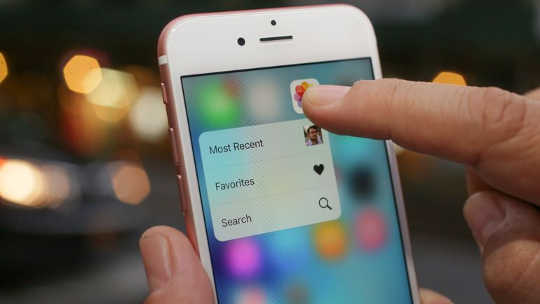
The rise of smartphones has transformed communication, yet this convenience may be harming mental health and relationships. Studies suggest that electronic communication can lead to increased isolation and unhappiness, particularly among the iGen cohort, who are the first to grow up with these devices. Understanding these effects is crucial as society navigates this new normal.

Why do we keep doing things we know aren't good for us? The answer may have less to do with weakness and more to do with habit, emotional soothing, and conditioning. Understanding why the pattern began can help us forgive ourselves and finally choose differently.

Not every child who sits apart from the group is struggling. Some children genuinely prefer solitude, and for years researchers assumed that preference was harmless. New findings complicate that picture in ways every parent and educator needs to understand.

You are not imagining it. There is something about the shift in seasons that makes everything feel heavier, sharper, or just different in ways you cannot quite name. If your stress seems to rise and fall with the calendar, science and centuries of human experience are both on your side.

The prevalence of smartphone photography during experiences can significantly affect how events are remembered and shape identities. While photos serve as external memory aids, they may lead to poorer recall and create a fixed narrative of individuals, impacting mental health and agency. Understanding these effects is essential for navigating the relationship with technology.

Emotion regulation is a vital psychological process that allows individuals to manage their feelings and responses. However, some people struggle with this ability, leading to mental health issues like anxiety and depression. Identifying the underlying neural mechanisms and the effectiveness of various strategies can provide insights into better management of emotions.

The concept of the world as a mirror suggests that our perceptions and experiences reflect our inner state. When we encounter negativity, it may indicate unresolved issues within us. This idea challenges us to examine our reactions, especially in parenting, and recognize how our emotions shape interactions with others.

Something quiet is happening among younger people, and it is easy to miss if you are not paying attention. Gen Z, the generation that grew up holding a smartphone before they could drive a car, is starting to put those phones down. Not because technology itself is the enemy, but because they are finally naming what has been exhausting them for years.

For decades, research on adolescent development leaned heavily on trauma, crisis, and stress as the defining forces of young lives. A major new study from the University of Zurich challenges that assumption directly, finding that most young people point to positive, ordinary milestones as the experiences that shaped them most. Understanding why this matters could fundamentally change how we support the next generation.

You catch a glimpse of yourself in the mirror and something is just off. Your hair is doing that thing again — the thing you cannot name but absolutely cannot fix — and suddenly the whole day feels slightly tilted. Bad hair days are real, they are frustrating, and it turns out there is a lot more science and self-care wisdom behind them than most of us realize.

The journey to healing the emotional body involves recognizing and transforming negative emotional residues into higher vibrations. By focusing on consciousness and utilizing specific exercises, individuals can release emotional blockages and enhance their overall well-being, allowing for a deeper connection with their Higher Self and the world around them.

Recent advancements in psychology have shifted the perception of humor from a negative trait to a valuable character strength. This article explores how humor is linked to emotional well-being, cognitive processes, and wisdom, particularly in older adults, and highlights ongoing research into its benefits for mental health and social interactions.

Manipulation is often viewed as a morally dubious act, but what truly defines it? This article explores the nature of manipulation, its emotional and psychological mechanisms, and the distinction between harmful and benign influences. By examining various examples, it highlights the moral implications of manipulating others and the importance of intention in defining manipulation.

There is a particular kind of exhaustion that comes not from doing too much, but from editing yourself constantly. For many bi+ and gender-minority individuals, every social interaction carries an invisible question: how much of myself is safe to show right now? New research is starting to map exactly how that daily calculation shapes mood, identity, and depression over time.

The subconscious mind governs 95% of actions, often leading to automatic responses based on ingrained beliefs. This article explores how these subconscious programs shape lives, the origins of perceptions, and how emotional intelligence can help rewrite these patterns for a more fulfilling existence.

Are you helping someone you love, or unintentionally enabling them to continue their same old pattern? The difference can determine whether a person grows stronger or remains stuck. Discover how to offer healthy support that empowers rather than enables.

Daily actions often conflict with personal beliefs due to past experiences. By utilizing techniques such as meditation, individuals can reprogram their inner consciousness, aligning their actions with their true intentions and releasing outdated beliefs. This process fosters personal growth and well-being.

You finally sit down to do the thing you have been putting off for three days, and somehow you end up reorganizing your desk, checking your phone, and making a second cup of coffee instead. Sound familiar? That loop has a chemical signature, and understanding it might be the most practical thing you do for your mental well-being this year.
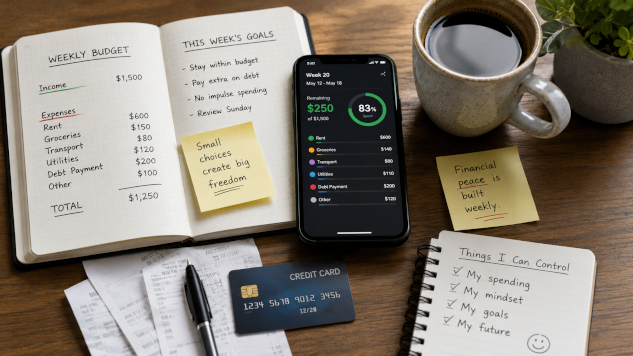 Money stress does not arrive once and stay put. It rises and falls with each paycheck, each unexpected bill, and each week you spend a little more than you planned. A new study tracking hundreds of workers across thousands of weeks reveals that financial stress is episodic, nonlinear, and surprisingly sensitive to small dollar amounts, which means the way most people try to manage it may be fundamentally misaligned with how it actually operates.
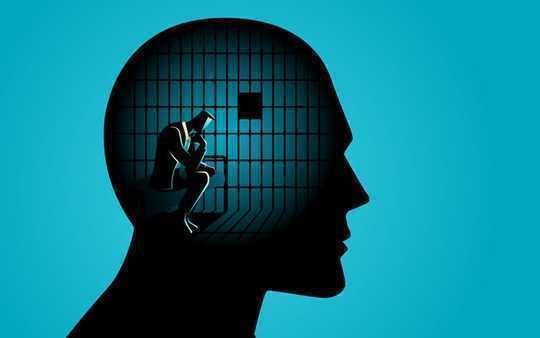
The intersection of technology and psychology presents both opportunities and threats to freedom of thought. While advances can promote self-reflection and authenticity, they also pose risks of manipulation by states and corporations. Understanding these dynamics is crucial for protecting mental privacy and preserving autonomy in an increasingly controlled environment.
When love begins to unravel, do you walk away or pick up the thread? “Thread By...

What if winning didn’t require someone else to lose? “Winners Together” imagines a world...

Every morning is another chance to choose what stays with us and what we finally leave...

How much of yesterday are you still carrying today?

In a world of swipes, matches, texts and disappearing conversations, sometimes the most...

A chatbot told someone it loved them, and that person felt genuinely comforted. That...

Accepting oneself is crucial for navigating change without fear. This article explores...

Despite advancements in technology and education leading to higher IQ scores in...
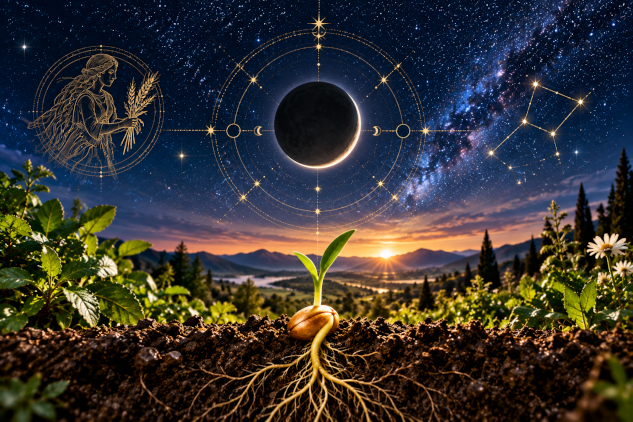
The New Moon is birthed in Virgo on September 11 (Sept. 10 in US time zones)—a lunation...

Exploring the relationship between light and darkness reveals profound insights into...