
Life Changes
Healing Through Storytelling: Lessons from The Odyssey
The journey of Odysseus in Homer's 'The Odyssey' offers profound insights into healing...








 Without knowledge of what’s happening, sensitive individuals may grow up coping in unsatisfying ways. But this doesn’t have to be the case. For someone who is highly empathic, refining and modulating this deep way of knowing involves several keys...
 Human memory does not operate like a video tape that can be rewound and rewatched, with every viewing revealing the same events in the same order. In fact, memories are reconstructed every time we recall them.
 I began the practice of “stepping aside” only after years of stepping into business that was clearly not my own. I had mistakenly assumed that helping others make their decisions was an important calling. It showed them I cared. It was my way of remaining important to them. Or so I thought . . .
 Small but insidious dragons lurk to intercept us on our spiritual journey through the land of ecstasies and voids. One of these is the infamous sheltering dragon.
 "Don’t cry because it’s over. Smile because it happened." Those nine words by Ted Geisel (Dr.Seuss), one of our country’s favorite storytellers, contain so much wisdom. They apply to many different aspects of life, but I would like to focus on the area of relationships.
 Whether it’s better to brag or to be humble can depend on what perception you seek to change and whether the truth will ever come to light, research suggests.
 The biases we hold below the surface influence how we view this election season, says Efrén Pérez, an associate professor of political science and sociology.
 Most people will categorically agree that one of the most difficult emotions to express is forgiveness. More lives have been destroyed by bitterness and the inability to forgive than perhaps any other negative emotion. Even the most minuscule issues that we refuse to let go of can poison...

Recent research reveals that even those who struggle with mindfulness can experience significant emotional benefits from meditation. A study showed that participants who meditated demonstrated similar emotional regulation as naturally mindful individuals, suggesting that meditation is a more effective method for managing negative emotions than simply trying to be mindful in the moment.
 Magicians, dictators, advertisers and scientists all know it. It is possible to influence people without them even realising it.
 Globally, women are triumphing in historically male-dominated areas. 2017 may begin with women at the helm of Germany, Liberia, Norway, South Korea, the UK, the US, General Motors, the IMF, YouTube and possibly the United Nations.
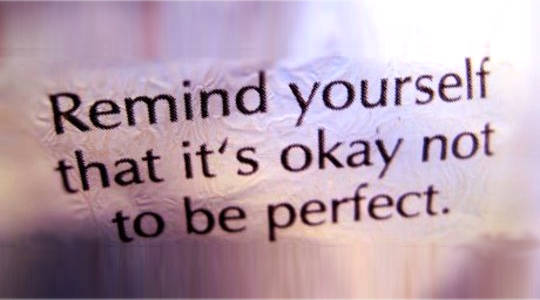 Feeling accepted seems to feature so highly in our lives. We set such great store by how others perceive us. Even amongst people you would count as close acquaintances, do you let them see the real you?
 A recent article offering men advice about how to proposition a woman wearing headphones – encouraging them to block her path to prevent her from ignoring them – rightfully provoked a major backlash.
 To really know about peace is to embody the truth that you and peace are one. But since so many aren’t aware of what they truly are, how can they possibly know lasting peace? This lack of awareness is why, despite the efforts of activists, seekers, and indeed so many in the world who desire peace, an enduring peace escapes us.
 While alcohol is a legal and common way many societies stimulate social interaction, when consumed at high levels over long periods it can undermine physical health and cause cancers and other disease.
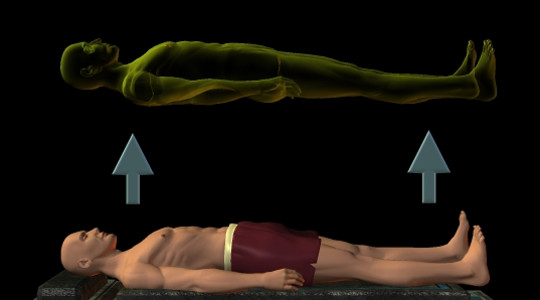 Your eyes begin to open after a good night of sleep, but something feels weird. You try to rub the tiredness out of your face but can’t lift your arms. In a panic you try to take a deep breath but can’t draw air.
 Our linguistic and legal obsession with “insult” and “offence” is nothing new. In 1832, Sydney resident William McLoughlin was given 50 lashes for using the word “damned” against his master.
 Tear-jerkers such as Adele’s Someone Like You frequently top the charts these days, while gloomy classical compositions like Mozart’s Requiem have moved people for centuries. Both portray and bring about a strong sense of loss and sadness.
 People were more likely to underestimate their own level of drinking, drunkenness, and the associated risks when surrounded by other drunk people, a new study shows. Those people also felt more at risk when surrounded by people who were more sober.
 Perfectionism can prevent us from acknowledging the best in ourselves because our attention becomes focused on overly obsessing with the worst in ourselves. As a result perfectionists often beat themselves up with negative self-talk and self-defeating behaviour.
 Do you feel like you're never enough? That there's never enough time? Money? Friends? Great opportunities? Recognition? Do you believe if you had or did something else -- got married, earned more, looked more beautiful, danced better, or had more time -- you'd finally relax and feel okay? Do you believe more is better? Are you rarely satisfied?
The journey of Odysseus in Homer's 'The Odyssey' offers profound insights into healing...

Fostering a legacy of joy empowers individuals to inspire authentic self-expression in...

Junk emotions like anxiety, anger, and jealousy can hinder personal well-being and...

Awareness meditation shifts focus from traditional breath techniques to observing...

The exploration of precognitive dreaming reveals a profound interconnectedness within...
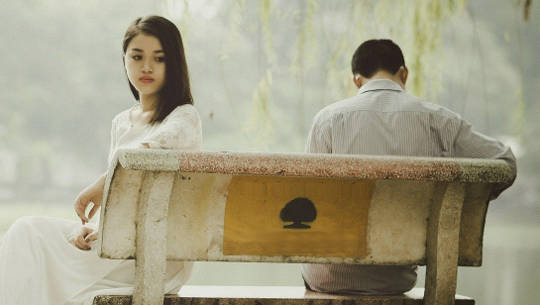
Negative moods can linger and affect overall well-being, but identifying their triggers...

A rare celestial formation is quietly reshaping the foundations of everything we know —...

You don't need a week in silence at a mountain retreat to feel spiritually alive again....