-
Details
-
Written by: James Trimarco and J. Gabriel Ware
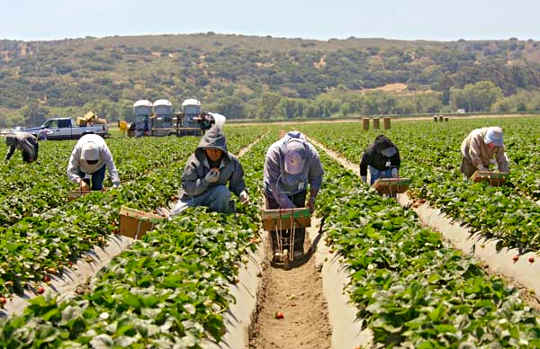 Pruitt’s approach to the EPA is likely to threaten farmworkers, who are highly exposed to the effects of climate change, including heat stress and increased pesticide use.
Workers harvesting strawberry field, Salinas, California.
Photo Credits: Holgerhubbs. (Wikimedia, cc 3.0)
Pruitt’s approach to the EPA is likely to threaten farmworkers, who are highly exposed to the effects of climate change, including heat stress and increased pesticide use.
While Scott Pruitt was the attorney general of Oklahoma, he sued the Environmental Protection Agency 14 times, mostly to dispute the agency’s right to regulate climate-altering emissions. Last week, Pruitt was confirmed by the Senate to head the EPA and swiftly announced his plan to revoke the Clean Power Plan, a policy enacted by the Obama administration to combat global warming. Pruitt did not mention climate change in his first speech to agency staff on Feb. 21, but asserted that “regulations exist to make things regular,” implying that he’ll work to ease regulatory burdens on polluters.
Pruitt’s positions on climate change have been widely reported. Less well-known are the threats that his approach to the EPA is likely to pose to farmworkers, a group that is inextricably tied to the environment and the climate. These workers, more than half of whom are undocumented, are already busy fighting against President Trump’s promised deportations—but they say they’re prepared to lobby for climate justice, as well.
Part of the problem is that the farmworkers are “invisible,” says Jeannie Economos, the health and safety project coordinator at the Florida Farmworker Association. Most Americans have little contact with farmworkers, which makes the impact climate change will have on them hard to understand.
But that doesn’t mean it’s not there. As temperatures climb, farmworkers are among the most exposed. Farmworkers are four times more likely to be affected by heat stress, according to an ongoing study by the Economos’ organization. Plus, Economos says, climate change is already increasing crop diseases and pests, which threaten farmworkers’ jobs.
And then there’s the question of pesticides. “If we have warming temperatures, and increased pests on crops, does that mean more pesticide use—and more pesticide exposure for farmworkers?” she asks.
Rosalinda Guillen, a 65-year-old former farmworker who grew up in a farm labor camp in Skagit County, Washington, says she’s certain climate change increases farmworkers’ exposure to pesticides. She believes the effects could be deadly.
“When you’re out in the fields and you’re working hard and you’re sweating because the weather is hot,” she says, “the pesticides are absorbing in your skin—and you’re certainly breathing it in.”
Compounding that issue is the fact that the EPA sets the national rules for pesticide exposure. Those standards were strengthened in 2015 after many years of organizing by farmworkers and their allies. Margaret Reeves, senior scientist with the Pesticide Action Network, says her group worked on the issue for 15 years before the standards were changed. The new rules included language prohibiting farmworkers under the age of 18 from handling pesticides, requiring more training for those who apply pesticides, and mandating that farmers keep records of the pesticides they use.
That record-keeping is crucial, Reeves says, because it’s difficult to be sure what impacts chemicals are having when most states don’t require farms to report data on how they’re being used.
Rollback of these reforms would be a money-saver for agribusiness groups that lobbied against them at the time and are now celebrating Pruitt’s confirmation.
But farmworker advocates are worried. “We’re concerned that Pruitt’s antagonistic approach to the EPA can lead to weaker occupational safety measures and increase [farmworkers’] exposure to pesticides,” says Bruce Goldstein, the president of Farmworker Justice, a nonprofit that advocates for better working conditions for migrant and seasonal farmers. In the past, his organization has taken legal action against the EPA in order to protect farmworkers from exposure to pesticides.
But because the implementation and enforcement of the new EPA rules happen at the state level, Reeves says, she’s hopeful that the stricter rules may stick around, despite any actions Pruitt might take. And “maybe, just maybe, things will move forward,” she says.
Meanwhile, Guillen is organizing on the behalf of farmworkers and immigrants with Front and Centered, a coalition of more than 60 organizations representing people of color and of lower-income people—especially those facing serious pollution in the neighborhoods where they live.
“It’s our communities that are impacted first by climate change and policies,” Guillen says. “That’s why our goal is to bring all of these communities together and build enough power so that policymakers are forced to listen to us. When they discuss climate change, we have to be at the table.”
This article originally appeared on YES! Magazine
About The Authors
James Trimarco and J. Gabriel Ware wrote this article for YES! Magazine. James is a senior editor at YES! Follow him on Twitter @jamestrimarco. J. Gabriel Ware is a reporting intern at YES! Follow him on Twitter @JGabinator.
Related Books














 Much like ExxonMobil, Shell lobbied against climate legislation and invested billions in fossil fuels despite knowing dangers of global warming
 Donald Trump seems to think so. During his campaign for president, Trump returned again and again to his supposed success as a businessman and promised government programs “under budget and ahead of schedule.”
 Proponents of “school choice” say that voucher programs—which allow parents to use state education funds to enroll their children in private schools
 As House Republicans labor to define a new plan to replace the Affordable Care Act, often called “Obamacare,” public support for the 2010 legislation is at an all-time high, according to a national survey taken in January.
 At the Colorado Water Institute at Colorado State University, we work in partnership with the farm and ranch community to find solutions to difficult western water problems. Farmers and ranchers often express frustration with one-size-fits-all...
 President Trump on Tuesday night made what he told a meeting of governors on Monday would be “a big statement” on infrastructure spending.
 Donald Trump’s candidacy and now, presidency, have resurrected a public discourse not heard in this country since the Great Depression
 The wealthy will not be able to build a wall high enough or a silo deep enough. The only solution is to bring your wealth home and invest in community resilience to ensure the survival of all.
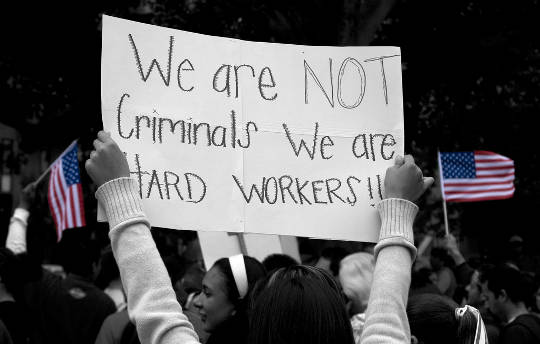 Immigrants have long been a scapegoat when economies are sputtering, jobs are being lost or security is a concern.
 The Trump administration has begun the third, most formidable White House-led attempt in EPA’s brief history to
  Scientists have figured out an Ice Age paradox and their findings add to mounting evidence that climate change could bring higher seas than most models predict.
 The heatwave that engulfed southeastern Australia at the end of last week has seen heat records continue to tumble like Jenga blocks.
 The frequency of hail storms, thunderstorms, and high wind events has decreased by nearly 50 percent on average throughout China since 1960.
 Plans put forth by House Speaker Paul Ryan and HHS Secretary Tom Price are 'unlikely' to fulfill President Donald Trump's campaign promises—'but single payer could'
 In 2014, the Supplemental Nutrition Assistance Program (SNAP), a federal program to address food insecurity in the United States, provided $70 billion in nutrition support to 46.5 million families and children living in 22.7 million American households.
 Instead of falling to the Nazi party, Norway broke through to a social democracy. Their history shows us polarization is nothing to despair over. The key to avoiding fascism? An organized left with a strong vision and broad support.
 After intense political activism, an attack from the Trump administration on public lands has been shot down. The fight is far from over, but with the unexpected fightback of hunting and fishing groups, attempts to privatize federal land will meet new opposition.