Childhood Adversity Accelerates Biological Aging
A recent study reveals that childhood experiences of violence, abuse, and neglect can significantly accelerate biological aging and impact health outcomes. Researchers found that...


Why do people collect things? Recent research in collecting psychology points to one powerful driver: the desire for control. Collecting offers a sense of structure and meaning in uncertain times. Each piece added to a collection brings order to chaos and creates a deeper sense of completion. Understanding this psychology helps us see why humans collect and how it connects to well-being.

Gen Z communication is shifting in ways that unsettle many adults. Phone calls, once the gold standard, now trigger phone anxiety. Instead, texting, voice notes, and video chats are emerging as safer, more controlled forms of interaction. This reinvention of connection says a lot about how society is adapting to digital overload and the desire for balance. The question is: what does this mean for the future of human connection?

Life is but a dream, not just in nursery rhymes but in how we live each day. When we view life as a waking dream, full of symbols and synchronicities, we see deeper meaning in everyday encounters. Choosing love over fear transforms the dream into a source of healing and connection. Each moment invites us to awaken, row gently, and live our dream consciously.

September astrology opens with a powerful week: Saturn retrogrades into Pisces, Uranus stations retrograde, and a Total Lunar Eclipse in Pisces arrives on September 7, 2025. These cosmic shifts highlight endings, awakenings, and new perspectives. From power struggles to breakthroughs, this week carries a wave of transformation. Tuning into the deeper meaning can help you move with the currents, turning uncertainty into renewal and cooperation.

Empathy decline is not just personal, it’s societal. Compassion fade explains why we care less as suffering grows, leading to indifference, division, and even cruelty. By recognizing this psychological trap, we can reignite human connection and responsibility. Restoring empathy is vital for rebuilding trust, justice, and compassion in our world today. Without it, society risks unraveling into fear and isolation.

Parenting styles do more than guide behavior—they shape brain development itself. Research shows that harsh parenting accelerates brain changes linked to anxiety, while warmth nurtures resilience and healthier mental states. Understanding this connection gives parents tools to raise children with confidence and compassion. Parenting is not just about today’s choices; it’s about how the brain wires for a lifetime.

Eclipse season begins with powerful cosmic support guiding transformation and insight. Pluto and Sedna deepen personal growth while Uranus and Neptune awaken intuition and spiritual connection. Expect destined events, karmic shifts, and breakthroughs in awareness. This astrology forecast explores the week’s planetary influences and how eclipse season energies open pathways for renewal and self-discovery.

Dopamine anchoring is a powerful brain hack that helps you beat procrastination and build momentum today. By pairing ordinary tasks with enjoyable triggers, you train your mind to take action instead of delaying. This mindful method combines science and self-awareness, offering a simple yet effective way to stay motivated. Instead of waiting for tomorrow, dopamine anchoring helps you move forward now.

Toxic stress in childhood can lead to long-term health problems, but stability offers powerful protection. Research shows that predictable routines, supportive caregivers, and safe environments foster resilience and lifelong well-being. By addressing toxic stress and prioritizing childhood stability, we can safeguard mental and physical health for generations. Learn why stability matters and how small changes today can create healthier futures.

Life often asks us to choose: do we go with the flow or resist the flow? Each decision shapes our path, either aligning with the current or pushing against it. True empowerment isn’t about always surrendering or always resisting, but knowing which moment calls for which. This article explores the wisdom of balance, offering clarity on when to drift and when to steer your own course.

The global 4 day workweek experiment has shown that shorter hours can transform workplaces. Employees report less stress, higher job satisfaction, and better health, while employers benefit from improved productivity and retention. This movement challenges outdated notions of work and redefines success. Could fewer hours actually mean greater results? The evidence suggests the 4 day workweek is not just possible—it’s the future.

Many parents unknowingly believe myths about child creativity that actually hold kids back. From over-scheduling to relying too heavily on screens, these habits can stifle imagination instead of nurturing it. By rethinking everyday choices and debunking parenting myths, families can create environments where child creativity thrives, confidence grows, and imagination becomes an empowering tool for lifelong learning and resilience.

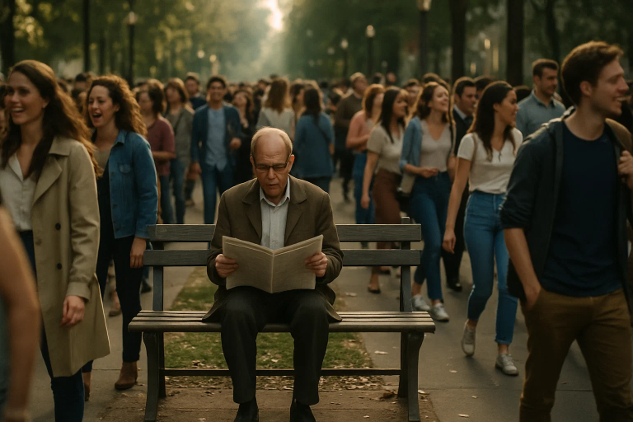
The “friendship recession” is one of those terms that at first sounds like a clever throwaway line, but the more you look at it, the more you realize it explains so much of our current loneliness crisis. It’s not just about having fewer friends. It’s about the loss of connection that once grounded us in community, gave us resilience, and kept us sane in a world that seems increasingly disjointed.

Failure is not the end, it’s often the beginning of something greater. By learning from failure, we open the door to resilience, wisdom, and authentic success. Every setback contains a lesson that guides us forward. When we shift our mindset, mistakes become milestones. Learning from failure is the true path to success, and it can empower you to embrace growth with confidence and clarity.

Boundaries... barriers... walls... All these words have similar meanings. They indicate a place where one must stop and go no further. In some cases boundaries and walls are wonderful. But too much of a "good thing" can become its opposite... bad.



This week’s New Moon in Virgo challenges order with Uranus and Sedna sparking sudden change. Emotions run high, but healing and renewal are possible as eclipse season begins.

Some mornings, grief feels like waking into weather—heavy air, a sky that can’t decide whether to weep or hold it in. You make coffee, your hands remember the ritual, and yet something in the room is missing. If you’re honest, the question isn’t “How do I stop this?” It’s “How do I live with this and still feel like myself?” That’s where grief recovery begins: not with erasing the love, but with graceful grieving that lets love keep its place.

Anger can derail relationships, work, and health if left unchecked. With practical anger control techniques, you can learn to manage anger before it manages you. From quick calming exercises to mindset shifts, this guide helps you transform frustration into constructive energy, so you stay grounded and in control—even when life tries to push your buttons.

Somewhere along the way, you may have noticed a shift. Science, once a beacon of wonder and progress, now finds itself under a shadow of doubt. Friends share skeptical posts on social media, headlines scream about “fake experts,” and even you might have found yourself wondering, can I really trust what I’m being told? That hesitation, that unease, is more common than you think. But it doesn’t have to be the end of trust. It can be the beginning of a healthier relationship with knowledge.

An attitude shift isn’t just feel-good fluff—it’s a practical, powerful way to reset your inner compass. This article shows how even small mindset changes can impact your relationships, health, and resilience. With grounded insight and real-life perspective, we’ll explore how to turn your inner critic into your inner coach using tools anyone can apply—right now.

There’s a comforting myth about aging: that it’s perfectly fine to slow down, sink into the couch, and let the television take the wheel. After all, you’ve earned it, right? The trouble is, that “earned rest” might be quietly chiseling away at your brain’s sharpness faster than time itself. While TV has its charms (and plenty of reruns to prove it), it’s about as stimulating to the brain as a lukewarm bowl of oatmeal. Meanwhile, the very devices many older folks eye with suspicion, smartphones, computers, tablets, might be the real tools to keep the lights on upstairs.