
Life Changes
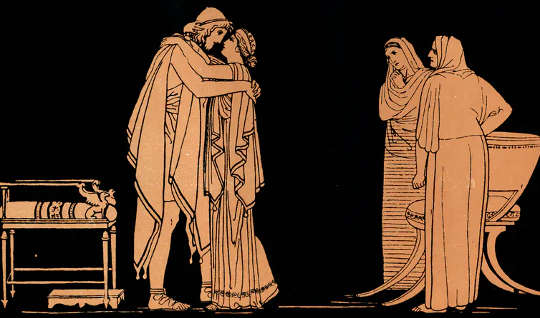
Healing Through Storytelling: Lessons from The Odyssey
The journey of Odysseus in Homer's 'The Odyssey' offers profound insights into healing...








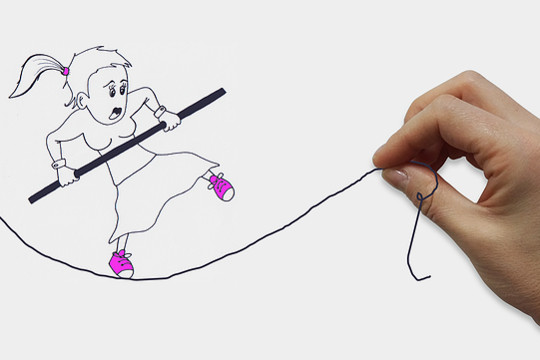
A survey of top Hollywood movie studio CEO’s asked, “What do you fear most?” The most common answer was, “I am afraid that people will find out I don’t really know what I am doing.” Meanwhile these execs were turning out fabulous movies, earning many millions of dollars for their studios.

People have short memories when it comes to what they consider “normal” weather, according to new research.

One of the most powerful ways to pray is to practice gratitude. Practicing gratitude as a form of prayer is very easy and is immediately rewarding. All you need to do is acknowledge and thank the Universe for all your blessings, whether they are...

When we think of the future, it very naturally seems to be ‘open’ – a realm of unfixed possibilities, awaiting the choices we make now. But are we right to think about the future this way?

Our spiritual evolution depends heavily upon our recovery from our worst addiction -- our addiction to the victim archetype, which traps us in the past and saps our life energy.

"I like you, do you like me?" Isn't that how children approach one another, with total openness and acceptance? They have this pure, innocent way of expressing themselves, and have a completely disarming attitude like, "Hey, I want you to be my friend."

Peace is one of human's six emotions. It's the opposite of fear. When we're experiencing peace, our attention is in the present, we're relaxed, content, and our mind is still. Often it's thought that we need to meditate in order to feel peace, but it's not true. We simply have to pacify our fear and peace will naturally arise.

There are at least 2.6 million stillbirths a year across the world. More than 2,000 families each year suffer the loss of a stillborn baby in Australia, equating to six stillborn babies every day.

Thinking of the well-being of our romantic partners before our own may be hard-wired in our brains, according to new research.

Have you ever been startled by someone suddenly talking to you when you thought you were alone? Even when they apologize for surprising you, your heart goes on pounding in your chest.

Recently, for the first time, I planted zucchini in my garden. At first I thought people had exaggerated... But now I have discovered something. You may check your garden in the afternoon and see some small...

Nobody wants trouble. When confronted with a problem, keep this in mind -- that the people who initiate the conflict most likely don't want to be in that situation either. Find out the real cause of the disturbance and you may avoid...

Dynamic pricing can generate unintended consequences by changing the behavior of customers, according to a new paper.
In indigenous gift-sharing and kinship societies, individuals do not “win” at the expense of society but rather consider society’s win as theirs. Futurist Riane Eisler referred to this as “linking rather than ranking,” typical of the partnership paradigm, and the antithesis to the dominator paradigm. “Empowerment of self and others” characterizes the partnership model.

Exploring the concept of dark creativity reveals how originality and effectiveness can lead to morally questionable actions. From stealing flowers to deceptive event entry, the research highlights the fine line between creative solutions and ethical boundaries, urging a deeper understanding of how creativity can manifest in both positive and negative ways.

New research outlines a four-step plan to develop students’ connection to their learning environment and achieve an ideal state for learning: “flow.”
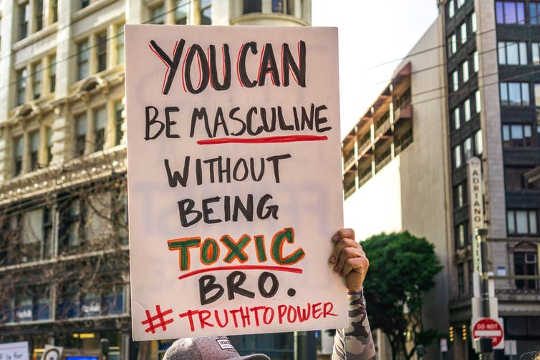
Toxic masculinity remains a pervasive issue, impacting both men and women in various ways. While traditional views of masculinity often glorify aggression and dominance, contemporary discussions, spurred by movements like Time's Up, challenge these norms and call for a more inclusive understanding of masculinity that allows for emotional expression and vulnerability.

Every creative venture has its moments when it would be easy to say, This is too much, it's hopeless. The person with will and determination says, This is challenging, and I will find a way to make it work. The first person is saying, I give up; the second, I will make it happen.

A good way to let go of unconscious beliefs and to see yourself more honestly is to examine the secrets you keep from others. Consider this: the fact that you have secrets is the same thing as affirming, "If people really knew me, they wouldn't accept me".
Exploring the secrets we keep can reveal unconscious beliefs and fears that hinder authenticity. By sharing these secrets in a safe environment, individuals can experience healing and acceptance. Exercises designed to confront and integrate these fears can foster transparency and promote deeper self-acceptance, ultimately leading to a more genuine way of living.
The journey of Odysseus in Homer's 'The Odyssey' offers profound insights into healing...

Fostering a legacy of joy empowers individuals to inspire authentic self-expression in...

Junk emotions like anxiety, anger, and jealousy can hinder personal well-being and...

Awareness meditation shifts focus from traditional breath techniques to observing...

The exploration of precognitive dreaming reveals a profound interconnectedness within...
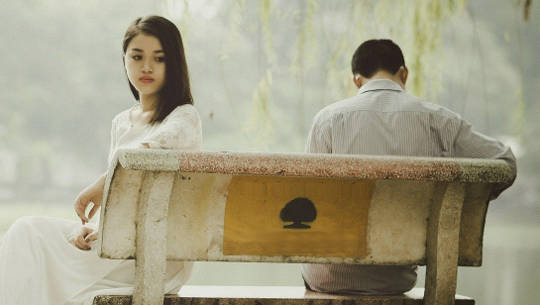
Negative moods can linger and affect overall well-being, but identifying their triggers...

A rare celestial formation is quietly reshaping the foundations of everything we know —...
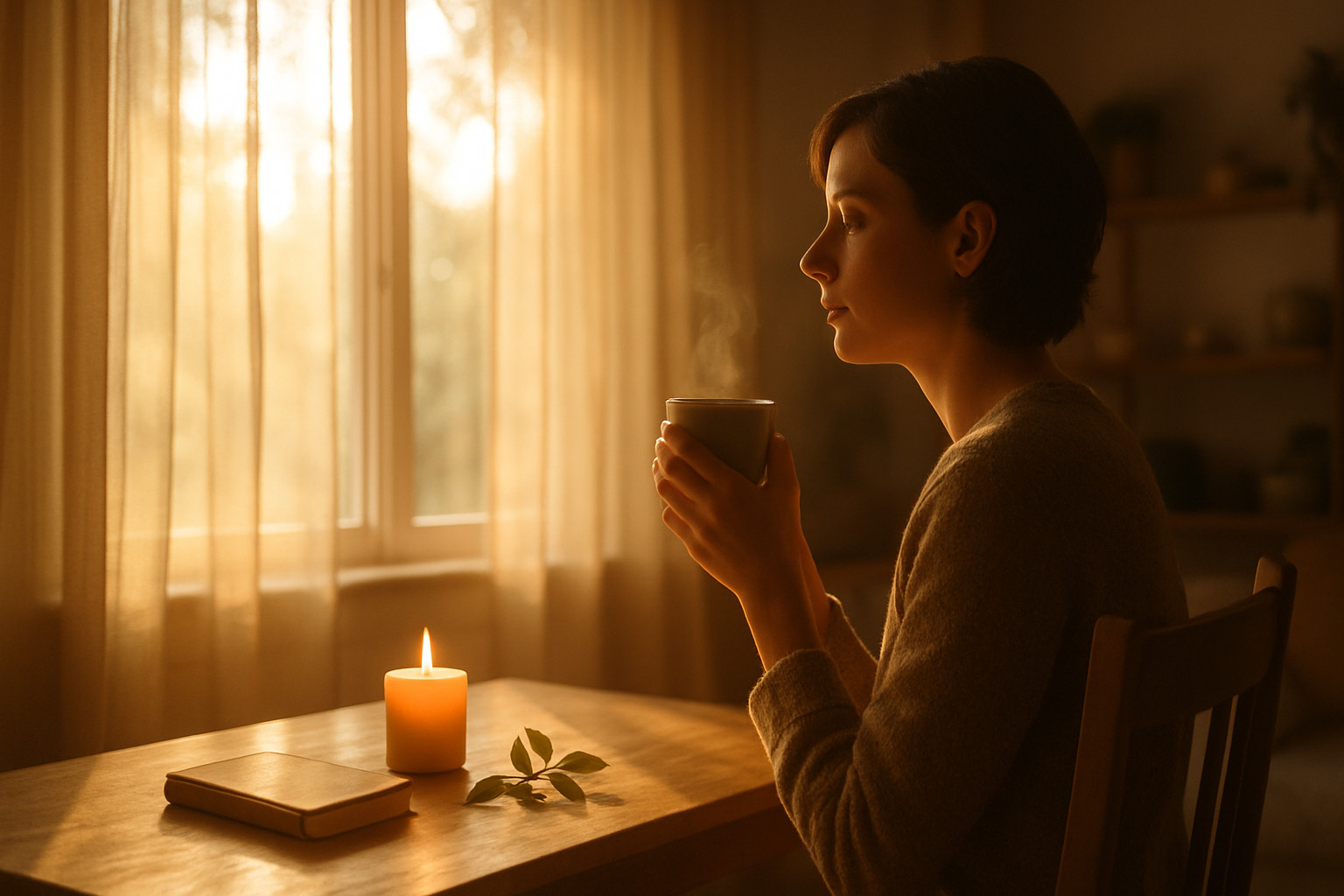
You don't need a week in silence at a mountain retreat to feel spiritually alive again....