Life Changes
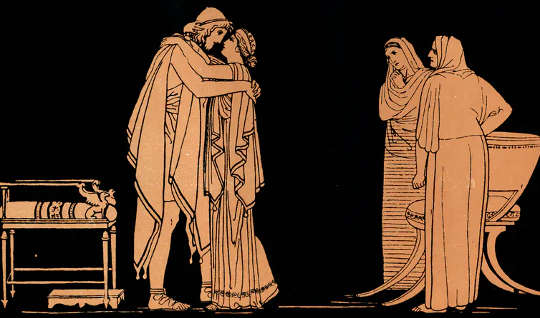
Healing Through Storytelling: Lessons from The Odyssey
The journey of Odysseus in Homer's 'The Odyssey' offers profound insights into healing...








 We want life to be secure as much as we want our plans and expectations to work out. We want to live happily-ever-after. We want life to conform to our wishes, to make us happy, and to protect us from human suffering. In the end, we want life to protect us from itself, and the idea of security offers us that false consolation.
 When Lynn Grabhorn was asked, “What is one simple thing I can do now to help prepare for the Shift?” her reply was, “Learn to be grateful”. She suggested the practice of extending gratitude for all the little things we take for granted and of developing an “attitude of gratitude.”

Report after report documents how—despite more technologies aimed at connecting people, ideas, and information—people of all ages continue to experience greater and greater social and personal disconnection. Why? Well, our body, mind, and spirit can only keep up with so much. When overloaded, we may disconnect because it all is too much or feels like it is too much.
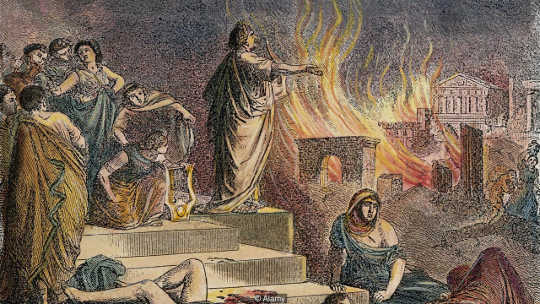 When it comes to people, there are only about a dozen life stories in the whole world, and each archetype has its own obvious characteristics.

One morning, all of us in the group revisited our childhoods to more closely examine those things that still have power over us. We did this in small groups of four persons and, when it was my turn, I revisited some physical violence from my parents. Ever eager to delve deeper, I discovered something I had never seen before.

The heart of Eastern wisdom teaches you to be naturally in the world without rejecting it. Many spiritual paths condemn and judge the world, as if they were enabling one to move beyond desires. But many fail to realize that they are desiring not to desire (a point that the Buddha understood).

One of the tools that I have used since its discovery in the first year after Pete’s death, is my image of my heart as a vast ocean, unable to be broken. Since its discovery, my heart is like water. If you come into my life, you’re enveloped completely, like a hand submerged in water. If you leave, the water goes back to complete, perhaps losing a drop. This idea...
A woman Zen master named Sono taught one very simple method of enlightenment. She advised everyone who came to her to adopt an affirmation to be said many times a day, under all conditions. The affirmation was, 'Thank you for everything. I have no complaint whatsoever.'
 A new article offers a potential explanation as to why we take pleasure from the misfortune of other people, a feeling known as schadenfreude.
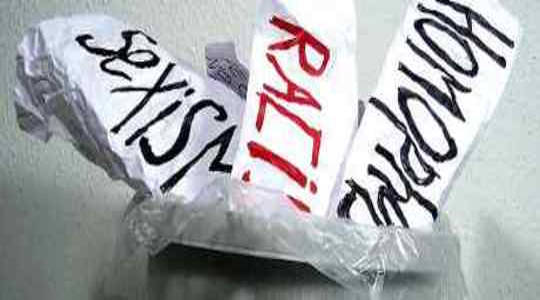
I find myself thinking on occasion, "I hate it when...." We use the word hate easily... We hate a certain kind of ice cream, we hate tofu, we hate hurting ourselves, we hate being late, we hate... This is where I realized that anything that we profess to "hate" is simply a preference on our part.
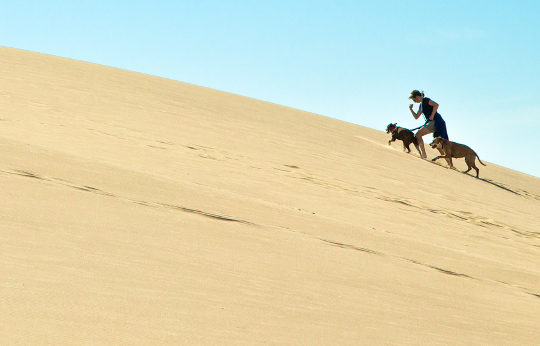
There are numerous things that make our life "work" for us. Some of these are things we learned along the way. And of course, there are things that make our life "not work so well". One thing that has worked for me is persistence.

The decision to choose anger over happiness is based on one factor, and that one factor is judgment. Does this person meet my expectations or not? Does this situation please me or not? Does this event conform to my morally correct and spiritually advanced view of the world or not? We basically organize our lives into two giant categories: people and things we like and people and things we don't like.

Señora Labotta stared deep into Lucina’s eyes. “You are not the only soul who has suffered in love. There is a saying I like very much. Boethius said this; ‘Commit your boat to the winds and you must sail whichever way they blow, not just where you want’.
 A small shift in the presentation of an assignment can reduce racial inequality within the group working on it and lead to better outcomes, according to a new study.
 Since I started writing about and researching emotional intelligence in business, I found that data in support of it has only gotten stronger. I saw recently a study, this surprised me, engineers, software coders and so on were evaluated by their peers, people who work with them day-to-day on how successful they were at what they do.
Healing the emotional body in the fourth chakra is by far one of the most important things you can do for your health. With years of experience in Ayurvedic lifestyle counseling, I am convinced that heart health is directly linked to our emotional state.
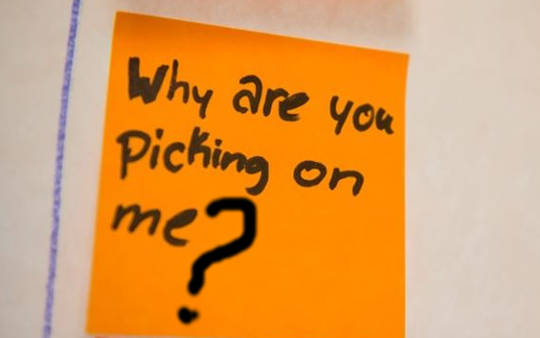
After years of unsuccessful efforts to diminish, expel, eradicate, and overcome the pain in my body, I wondered if the pain sensations might be a voice for not only the body but other levels of the self as well. I understood that, while pain felt strong and overbearing and it absolutely dominated my attention, it was not necessarily an adversarial power. It was a reaction.
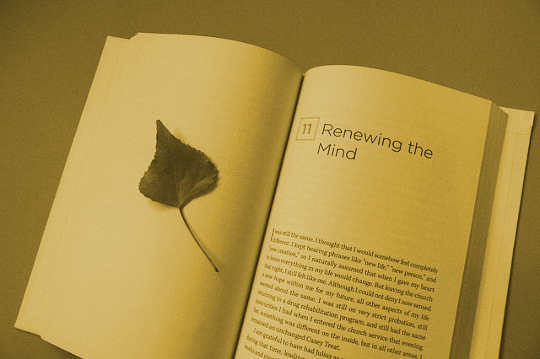
All day every day we experience things: physical sensations, emotions, and thought patterns. Most of our experience we fail to observe. While having an experience we don’t notice it. While this is well and good when it comes to sensation in our feet or many other aspects of living, failure to observe certain parts of our physical, emotional, and cognitive experience...
 Less parental warmth and more harshness at home can affect how aggressive children become and whether they lack empathy and a moral compass, according to a new study.

Alcoholics Anonymous was established as a form of benign anarchy. Members have to want to help themselves—and one another. While a great number of people see value in the mutual aid of Alcoholics Anonymous, many of them would be surprised to discover that the concept of mutual aid was popularized in the 20th century by the Russian anarchist Prince Peter Kropotkin (1842–1921) with his 1902 book Mutual Aid.
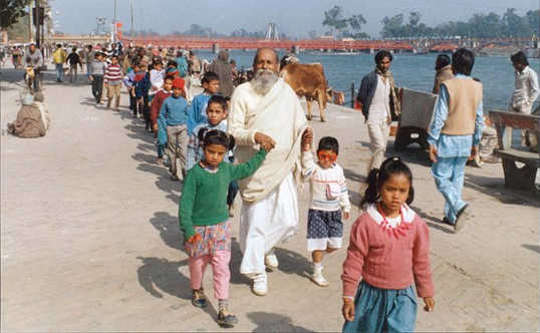
“I slept and dreamt that life was joy. I awoke and saw that life was service. I acted and behold, service was joy.”--Rabindranath Tagore. Babaji encouraged people to serve others on a daily, even hourly basis. He also taught that no act of service is beneath a person. Just because a person has an advanced degree or a very important job, they can still do the smallest act of service like digging ditches, washing dishes, scrubbing floors.
The journey of Odysseus in Homer's 'The Odyssey' offers profound insights into healing...

Fostering a legacy of joy empowers individuals to inspire authentic self-expression in...

Junk emotions like anxiety, anger, and jealousy can hinder personal well-being and...

Awareness meditation shifts focus from traditional breath techniques to observing...

The exploration of precognitive dreaming reveals a profound interconnectedness within...
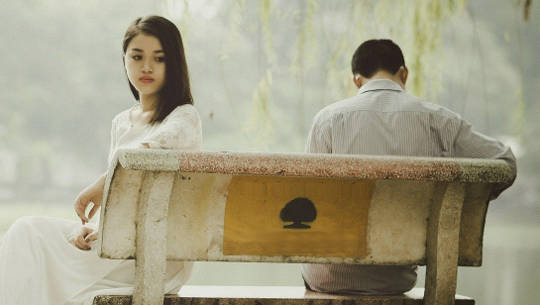
Negative moods can linger and affect overall well-being, but identifying their triggers...

A rare celestial formation is quietly reshaping the foundations of everything we know —...

You don't need a week in silence at a mountain retreat to feel spiritually alive again....