Life Changes
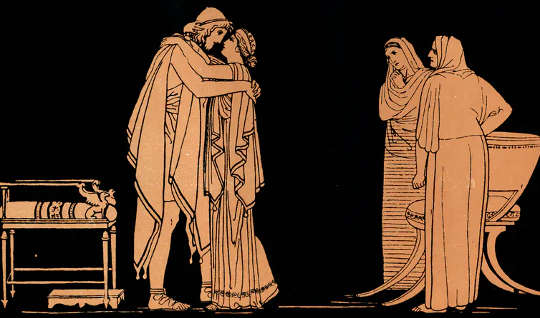
Healing Through Storytelling: Lessons from The Odyssey
The journey of Odysseus in Homer's 'The Odyssey' offers profound insights into healing...








 Our brains can detect an object’s value almost as soon as we see it, a new study shows.
 In the earliest stages of our education, it gets drilled into us that certainty is good, and phrases like "I don't know" or "I'm not sure" are lesser ways of thinking.

Fear is one of the most fascinating and crippling human emotions. All of us, at one time or another, have been overcome with fear. There are two kinds of fear: actual fear and psychological fear.
 Pop quiz, hot shot! What do cows drink? If you're like the vast majority of people, you probably just had the word "milk" flash in your brain.

Fear is one of our greatest teachers. From the time we have our first childhood lesson of keeping our hands off the hot stove to our mature ability to recognize danger and get out of the way, fear has earned our respect and has tremendous influence over our behavior. But sometimes fear holds us back...

Letting go is a hard one. Every part of humanity is designed to hang on. We hang on to our family connections, to the certificate we got at school, to our money, we embrace and hang on to our children, we lock our car and hang on to it. I think the whole definition of letting go is to stand outside the emotion.

The way you think about decisions gives you a remarkable decision-making super power that enables you to make decisions with confidence even when you have just the smallest glimpse of data. As a matter of fact it’s so good that, if you were the only one who had it, you could charge a fortune on your own psychic hotline. Fortunately for the rest of us, we all come hard-wired with this amazing capability, and all we have to do is learn to use it effectively.
Is there anything going on in your life that just wears you out? A thankless job, a chronic illness, a troubled relationship? Have you gone over and over this situation or circumstance without finding a solution or a way out?
Just because you have a thought doesn’t necessarily mean it is true. Most thoughts are just old circuits in your brain that have become hardwired by your repetitive volition. Thus, you have to ask yourself, “Is this thought true, or is it just what I think and believe while I am feeling this way?"

Within two weeks, 94 percent of women survivors will experience PTSD. #HealMeToo wants to give them a place to share and recover.
 Quitting smoking is a popular New Year’s resolution—but many have trouble sticking with it. “Many people underestimate how difficult it is to not only quit smoking, but to maintain the change.”
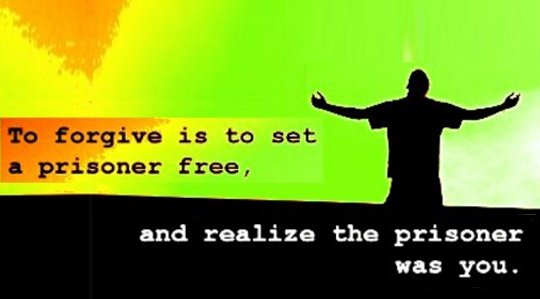
When the stock market plummeted in 2003 and I lost a third of my savings, I had a very hard time getting over the fact that I didn’t see it coming. Some young part of myself still believed I should be all powerful and all knowing. It’s a form of magical thinking many of us have developed...
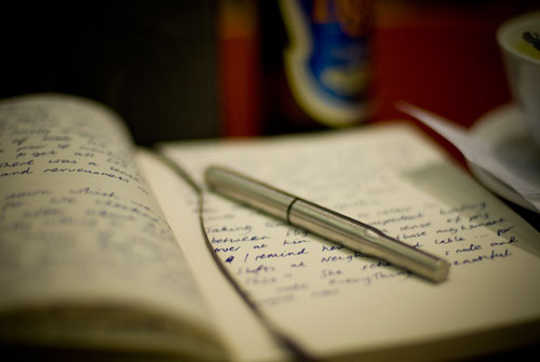
In a new study, researchers found a notable change in the brains of 16 women who wrote daily about gratitude in an online journal.

It is vital that we learn to tell the difference between a prompting from our Spirits and one coming from the fearful ego — our own, or those of others. Any call to action not coming through your Spirit as inspiration can probably be labeled as a should, an...
 A while back, in a conversation with my inner guidance, I was trying to find out some specifics on a project that I was working on. As in, when is this going to take place? Who's going to be handling it? Where is it going to be done? When is it going to be complete? All questions that my restless mind wanted to know. NOW!
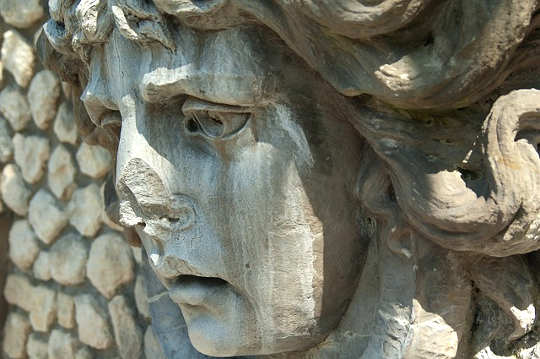
Don’t let the past define the present. This is such an obvious idea that when I first encountered it my reaction was, “Of course! That’s not new information.” And then I promptly fell back into my normal way of seeing life that was through the lens of the past. I did this so unconsciously that I honestly didn’t see how powerful my attachment to the past had become over the years.
 Do you really have sovereignty over own your mind anymore? Tristan Harris, a design thinker and former ethicist at Google, points to how smart phones changed our contract with advertisers, and our relationship with reality.
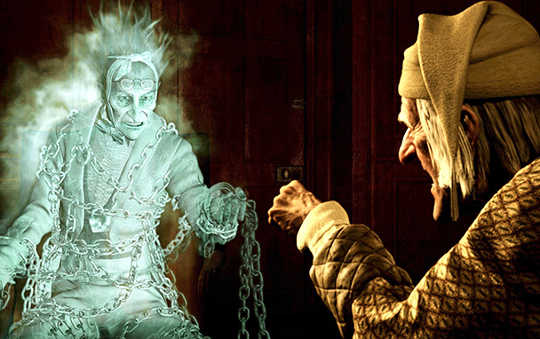
Charles Dickens' A Christmas Carol is often viewed as a critique of capitalism, but its true message highlights the importance of sympathy and responsibility among the wealthy. This article delves into the historical interpretations of the text and its evolving significance, especially in today's media-saturated environment, while examining how Dickens' work shaped the modern Christmas celebration.
 This time of the year brings a lot of changes to the usual day-to-day life of hundreds of millions of people: The weather is colder, trees are naked, snowy days become plentiful and friendly critters are less visible around the neighborhood.
 Even if you think of yourself as a human lie detector, there are some untruths that will sneak under the hood. For that, you can thank your brain, and it's absolute adoration for all things familiar, says Derek Thompson, senior editor at The Atlantic.
 Those who recover the best from painful events are those who find something meaningful in the experience. The exercise below helps us see events and circumstances from a different perspective and find meaning in what otherwise might seem to be baffling or meaningless events.
The journey of Odysseus in Homer's 'The Odyssey' offers profound insights into healing...

Fostering a legacy of joy empowers individuals to inspire authentic self-expression in...

Junk emotions like anxiety, anger, and jealousy can hinder personal well-being and...

Awareness meditation shifts focus from traditional breath techniques to observing...
The exploration of precognitive dreaming reveals a profound interconnectedness within...
Negative moods can linger and affect overall well-being, but identifying their triggers...

A rare celestial formation is quietly reshaping the foundations of everything we know —...

You don't need a week in silence at a mountain retreat to feel spiritually alive again....