Life Changes
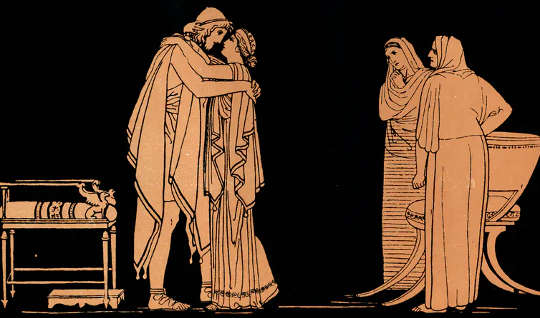
Healing Through Storytelling: Lessons from The Odyssey
The journey of Odysseus in Homer's 'The Odyssey' offers profound insights into healing...








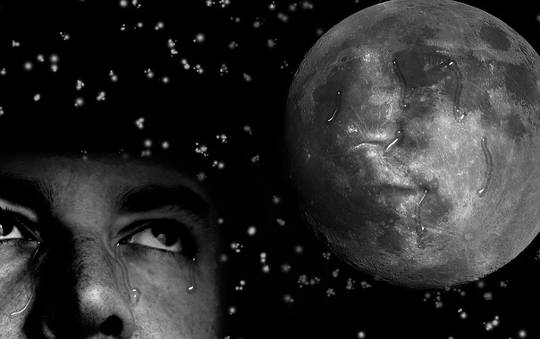
Heaven and hell both exist on this planet today. This day. There is not some day in the future where our free agency to make any choices that we want will be locked down. Where there will be a judgment made, and some eternal status assigned to us. We will not be “assigned” a heaven or hell experience. It is us, the human beings, who decide the fate of humanity.

Talk to high-school students preparing for their science exams, and you’ll probably hear two things: that they’re scared of physics, and relatively comfortable with biology. Strangely, this is contrary to the view of most researchers.
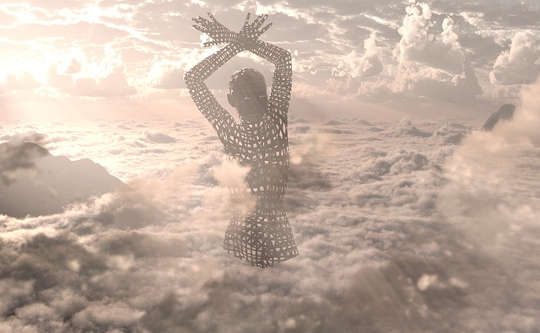
I am not some enlightened being trying to guide you on a journey he has already completed. That is an old model, partaking of a kind of spiritual hierarchy based on a linear conception of the evolution of consciousness. In the present transition, each of us is pioneering a unique part of the territory of Reunion. In keeping with that, I must offer you my doubt and conflict along with my insight.
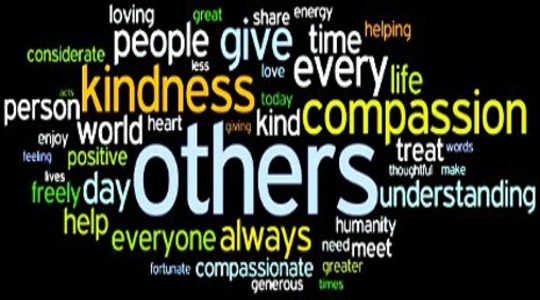
Every now and then I come across an affirmation that really 'hits home'. One of these is "I think and speak only words of love". I found this one in Louise Hay's book "Heal Your Body." When I started using this affirmation, I immediately saw and felt its power-full effects.
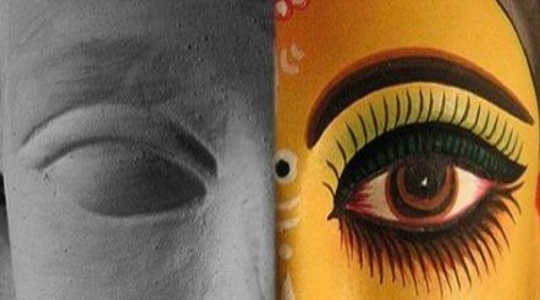
Success and failure only have to do with ego. The soul is busy taking a journey and having experiences from which it will learn. It knows nothing of success and failure. The soul only knows truth, honesty, and integrity...

The structured nature of cognitive behavioural therapy (CBT) and its clearly defined principles (based on the links between thoughts, feelings and behaviours) make it relatively easy to train practitioners, ensure standardised delivery and measure outcomes.

Roger Fisher (1922–2012) served as a reconnaissance pilot in World War II and then graduated from Harvard Law School, becoming a professor there in 1958. Witnessing maiming and death firsthand during the war and then seeing the destructive effects of costly, protracted litigation as a partner in a major law firm, Fisher was passionate about finding more creative alternatives to resolve conflict.

All of us have traumatic memories. Over the years we may become aware how they are affecting our lives in negative ways. Here’s a technique you can use on yourself to change your personal history by consciously healing memories with new thinking and imagination...
 Awe-inspiring experiences can have negative consequences as well as benefits, according to a new study. The study uses cardiovascular responses to stress to take a broad look at awe and the critical role perspective plays when considering the effects of encountering it.
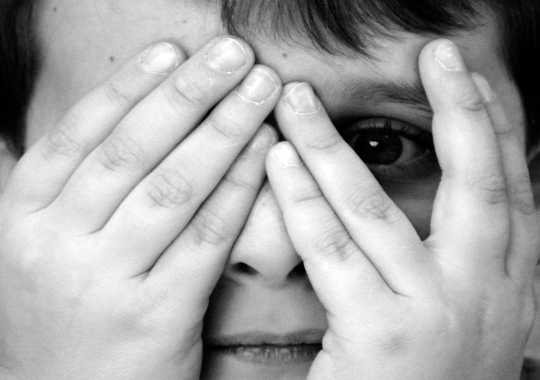
One day, as I was answering a question on the subject of death, the following words came to me: "You are not afraid of death, you are afraid of life." Thinking over that response, I realized how true it was. Our fear of death is all the greater when we have not dared to live.

What is the next step? Where are we all going? We are witnessing ... and participating in ... great events, extraordinary events. Nothing less than a planetary transformation is taking place, right here and now. Nothing less than a revolution in consciousness is going on. This is a time of great awakening! Hallelujah!

Connecting to the true Self gives me access to information and knowledge way beyond anything I have ever learned in a book or the limited amount stored in my memory. I know if I can tap into my true Self I will have access to all the information I need.

What happens if, instead of coming from fear of our own past, we initiate change from a state of quiet confidence that the changes we collectively wish to explore are being investigated to discover whether or not they might carry us to a HIGHER state of being than we are presently experiencing—even if there’s nothing significantly “wrong” with our present conditions.
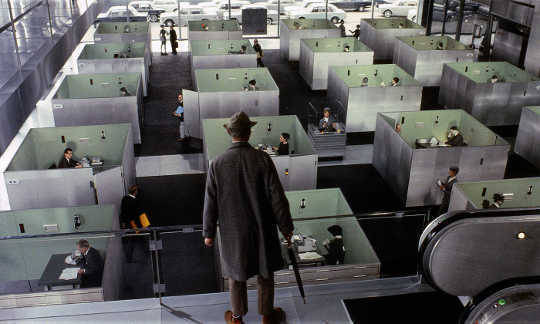
More and more companies, government agencies, educational institutions and philanthropic organisations are today in the grip of a new phenomenon. I’ve termed it ‘metric fixation’. The key components of metric fixation are the belief that it is possible – and desirable – to replace professional judgment (acquired through personal experience and talent) with numerical indicators of comparative performance based upon standardised data (metrics); and that the best way to motivate people within these organisations is by attaching rewards and penalties to their measured performance.
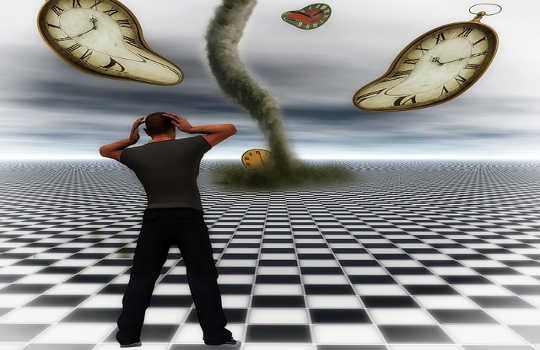
On average, men pick up on visual motion significantly faster than women do, according to a new study. Humans’ ability to notice moving objects has always been a useful skill, good for avoiding an animal predator in ancient times and crossing a busy street in the modern world.

Vulnerability isn’t timidity or weakness. Rather, it’s an acknowledgment that we are sensitive, alive, and affected emotionally by our interactions and experiences. When we are open and accessible, we are able to connect with ourselves, and we make it much easier for others to connect with us.

Seeing time tick down quickly on a countdown clock may give people more patience than seeing time pass slowly would. In a series of experiments, the speed of a countdown clock affected the patience and decision-making of video game players, both during and after the game, according to David Reitter, associate professor of information sciences and technology at Penn State.

As within, so without. Those four words compose one of the most powerful truths brought to mankind. What happens within is the determinant to what happens without. Carrying it one step further, in order to change our physical lives, we must look within for answers.
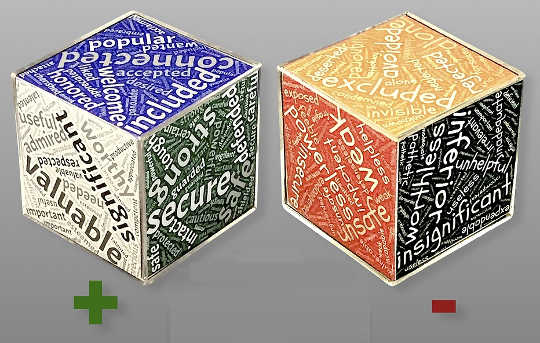
In addition to mapping human consciousness, the Seven Levels Model can also be used as a template to describe the stages of human psychological development. Figure 1 shows the stages of psychological development and their correspondence with the seven levels of consciousness.

It can seem like our human narrative has lost its way. Where the everyday news is filled with stories of humanity struggling with itself. Our eyes can show us everything that we don't want. And the chances for hope can seem fleeting. But there is a much bigger story going on as well. And you are a player in that story too.

New research may explain why some people—like sports stars—anticipate and react to fast-moving objects much quicker than others. When Serena Williams returns a lightning-quick tennis serve—most of us marvel at her skill and speed. Considering what the human brain overcomes to make it happen, these kinds of feats are nothing short of miraculous.
The journey of Odysseus in Homer's 'The Odyssey' offers profound insights into healing...

Fostering a legacy of joy empowers individuals to inspire authentic self-expression in...

Junk emotions like anxiety, anger, and jealousy can hinder personal well-being and...
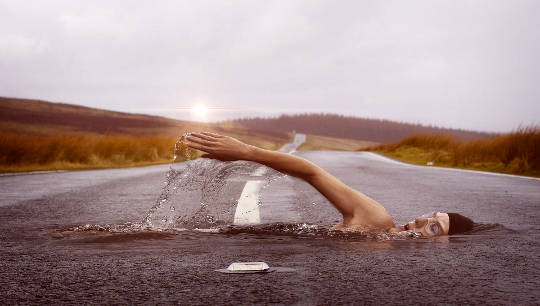
Awareness meditation shifts focus from traditional breath techniques to observing...
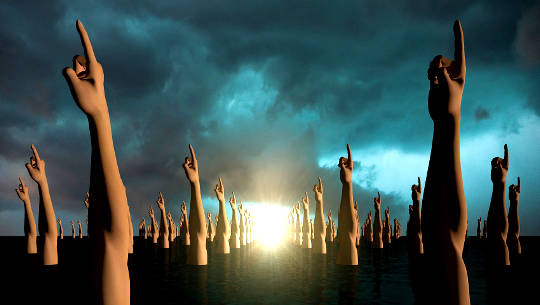
The exploration of precognitive dreaming reveals a profound interconnectedness within...

Negative moods can linger and affect overall well-being, but identifying their triggers...

A rare celestial formation is quietly reshaping the foundations of everything we know —...

You don't need a week in silence at a mountain retreat to feel spiritually alive again....