Reforms
Exploring Iceland's Unique Open Prisons
Iceland's open prisons, Kvíabryggja and another, offer a unique perspective on rehabilitation. With minimal security and a focus on communal living, these facilities prioritize...












 Wouldn’t it be great if scientists could make their minds up? One minute they’re telling us our planet is warming up due to human activity and we run the risk of potentially devastating environmental change.
 The various incarnations of the sustainable food movement need a science with which to approach a system as complex as food and farming. Thumb through U.S. newspapers any day in early 2015, and you could find stories on President Obama’s “fast-track” plans for the Trans-Pacific Partnership, antibiotic scares and the worsening California drought
 What if a trade agreement were designed to protect and nurture labor rather than capital? On May 8th at Nike’s headquarters, President Obama
  Everyone wants to be happy, and increasingly, countries around the world are looking at happiness as an indicator of national well-being and considering happiness in policy making. As this year’s World Happiness Report states, “Happiness is increasingly considered a proper measure of social progress and a goal of public policy.” But what makes people happy, and which countries have the highest levels of happiness?
 Virtually every American community has Chinese restaurants — and the story of how this came to be is fascinating and highly revealing about the often unintended impact of U.S. immigration rules. This ethnic food industry started to grow rapidly in the early 20th century, at a time when anti-Chinese sentiment was pervasive.
 Health insurance for freelancers can be expensive. When employed by a company, health insurance is generally covered, but strike out on your own and you find yourself paying several hundred dollars or more per month for minimal coverage. As freelancers are expected to make up fifty percent of the U.S. workforce by 2020, one can’t help but think there has to be a better way—and there is.
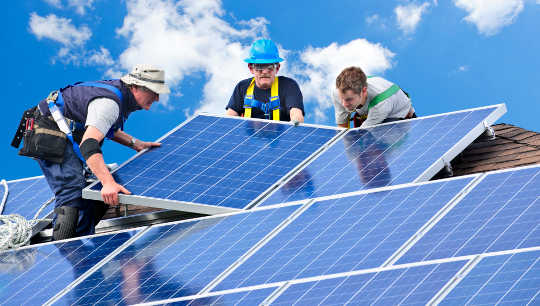 Converting the world’s entire energy infrastructure to run on clean, renewable energy could effectively fight ongoing climate change, eliminate air pollution deaths, create jobs, and stabilize energy prices.
 For a new study, researchers measured telomere length of poor and moderate-income whites, African-Americans, and people of Mexican descent in Detroit neighborhoods to determine the impact of living conditions on health.
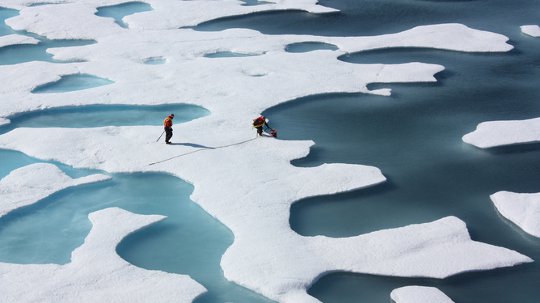 National and international studies have shown that the Earth is warming, and with this warming, other changes are occurring, such as an increasing incidence of heat waves, heavy downpours and rising sea levels.
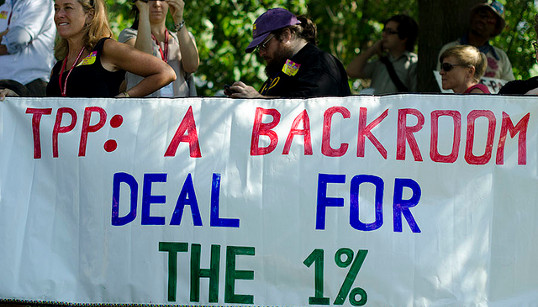 The push for the Trans-Pacific Partnership (TPP) is reaching its final stages as the House of Representatives will soon take the key vote on fast-track trade authority which will almost certainly determine the pact’s outcome
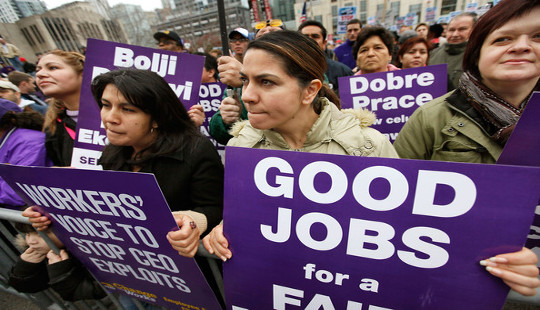 As a high school student, I came across an observation by Abraham Lincoln who said that “With public sentiment, nothing can fail; without it nothing can succeed.” Today “public sentiment” would be called “public opinion.”
 The USDA is putting $31 million behind a program that helps low-income families take home twice the veggies, and local farmers make twice the money.
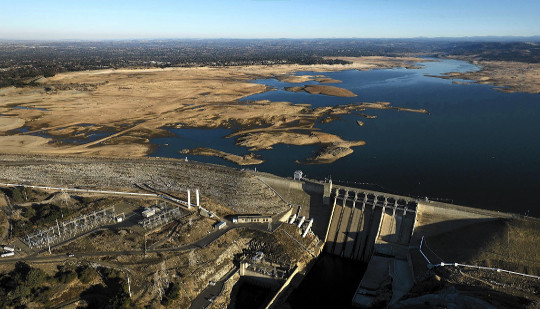 California is undergoing a record-setting drought that began in 2012, the worst in at least 1,200 years. It can be seen in many ways: most of the freshwater reservoirs are drying up, crops are wilting in the fields and groundwater is rapidly depleting.
 Suddenly, the mass media is writing about or televising the conditions in West Baltimore. Conditions that Washington Post columnist, Eugene Robinson, summarized as decades long “suffocating poverty, dysfunction and despair.”
 Native wolves had been eradicated and the forests of the eastern United States long cut down when residents of western New York first began to notice the arrival of coyotes in the 1940s. The coyotes of the Rocky Mountains and Great Plains were lithe and quick, usually weighing less than 30 pounds. The newcomers were different.
 According to a new study from Princeton University, American democracy no longer exists. Using data from over 1,800 policy initiatives from 1981 to 2002, researchers Martin Gilens and Benjamin Page concluded that rich, well-connected individuals on the political scene now steer the direction of the country, regardless of – or even against – the will of the majority of voters.
 Secret negotiations on the Trans-Pacific Partnership (TPP), a trade and investment agreement involving 12 nations of the Pacific Rim, are coming to a close, and President Barack Obama will soon submit the final agreement to the U.S. Congress for approval.
 President Barack Obama and his corporate allies are starting their campaign to manipulate and pressure Congress to ram through the “pull-down-on-America” Trans-Pacific Partnership (TPP), a trade and foreign investment treaty between twelve nations (Australia, Brunei, Canada, Chile, Japan, Malaysia, Mexico, New Zealand, Peru, Singapore, the United States and Vietnam).
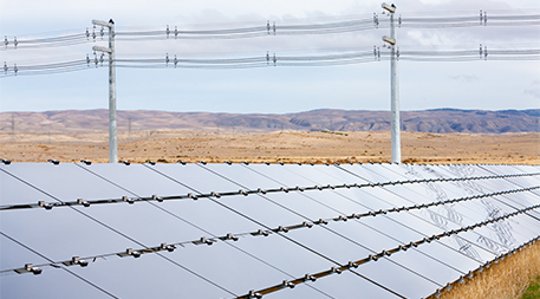 Inside a sprawling single-story office building in Bedford, Mass., in a secret room known as the Growth Hall, the future of solar power is cooking at more than 2,500 °F.
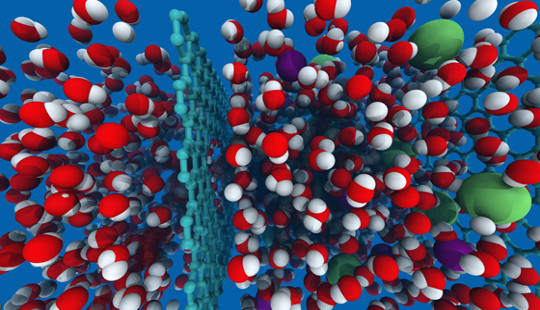 An increasingly water-stressed world takes a new look at desalination. It seems simple enough: Take the salt out of water so it’s drinkable. But it’s far more complex than it appears at first glance. It’s also increasingly crucial in a world where freshwater resources are progressively strained by population growth, development, droughts, climate change and more.